Our Mission is to provide high-quality compassionate care to all individuals with hearing and communication challenges!
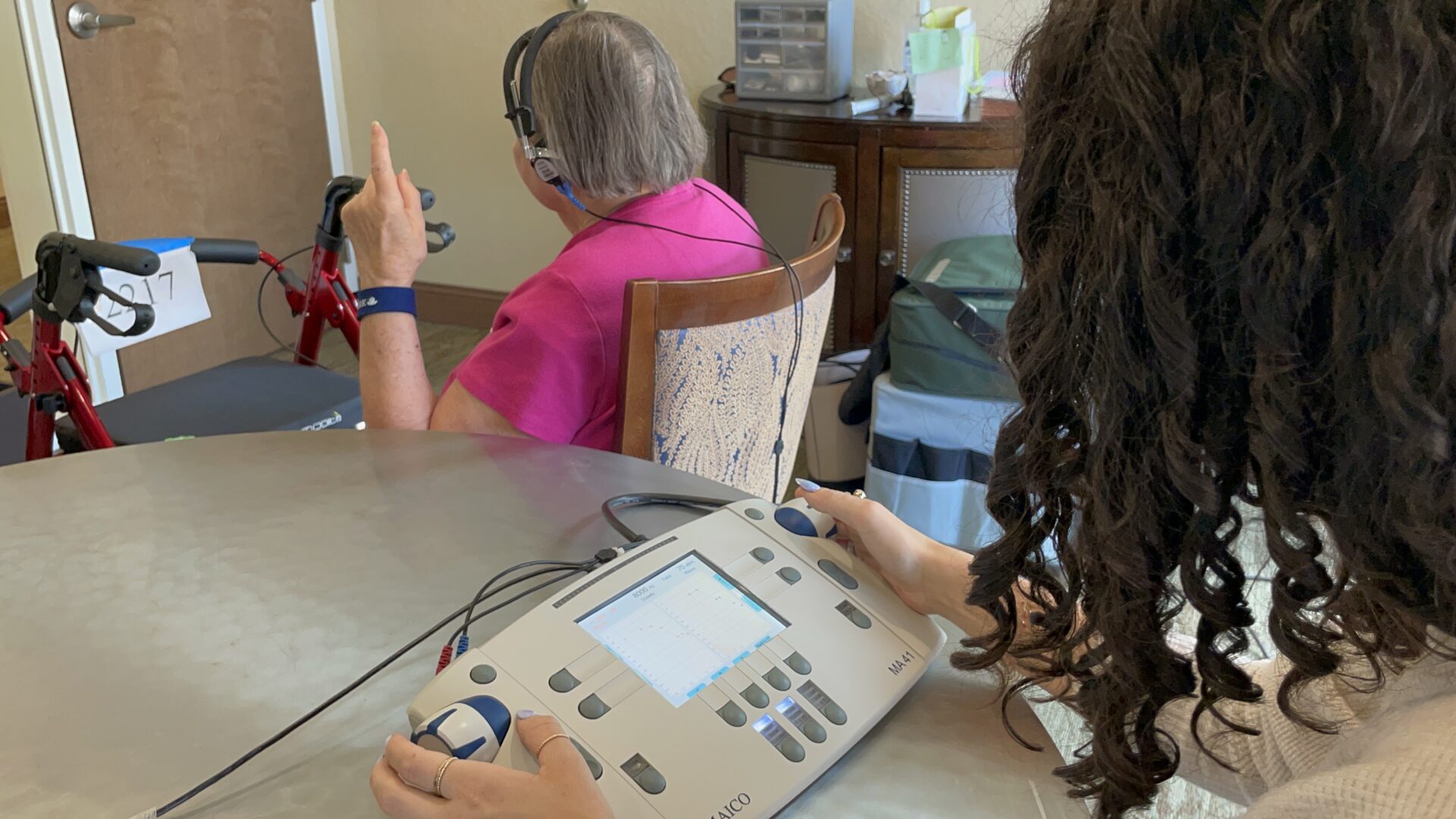
Why get a hearing test?
Hearing loss affects more people than you might think, and it could be impacting you or someone you love right now. As the third most common chronic physical condition in the U.S., it affects over 50 million Americans. However, many go untreated. Ignoring hearing loss doesn’t just affect your ability to hear—it can lead to social isolation, depression, increased risk of falls, and a lower overall quality of life.
The good news? Help is available, and early action makes a difference. If you’ve noticed changes in your hearing or are experiencing symptoms like tinnitus, don’t wait. Request an appointment below to schedule a hearing test today and take the first step toward better hearing, better health, and a more connected life.
What to Expect and Our Services
Our friendly staff genuinely cares, creating a warm, welcoming environment where you feel valued. To ensure safe, relaxed visits, our comfortable, ADA-compliant facility has no stairs to be climbed.
We offer personalized, attentive care focused solely on your needs, with thorough case history gathering. Plus, our precise, compassionate hearing testing—including Speech in Noise when appropriate—aims to understand your experience. We also look in your ears to ensure ear wax is not impacted. Learn more about ear wax by hitting the button below.
After the test, we review results with you, answer all questions patiently, and explain options clearly to help you make informed decisions. We also provide communication strategies to improve your quality of life.
Finally, a detailed, timely written report summarizes your evaluation, so you can proceed confidently.
What Makes us Different?
As a non profit, we are mission driven – not sales driven. We focus on providing prescription hearing devices that are tailored to your hearing.
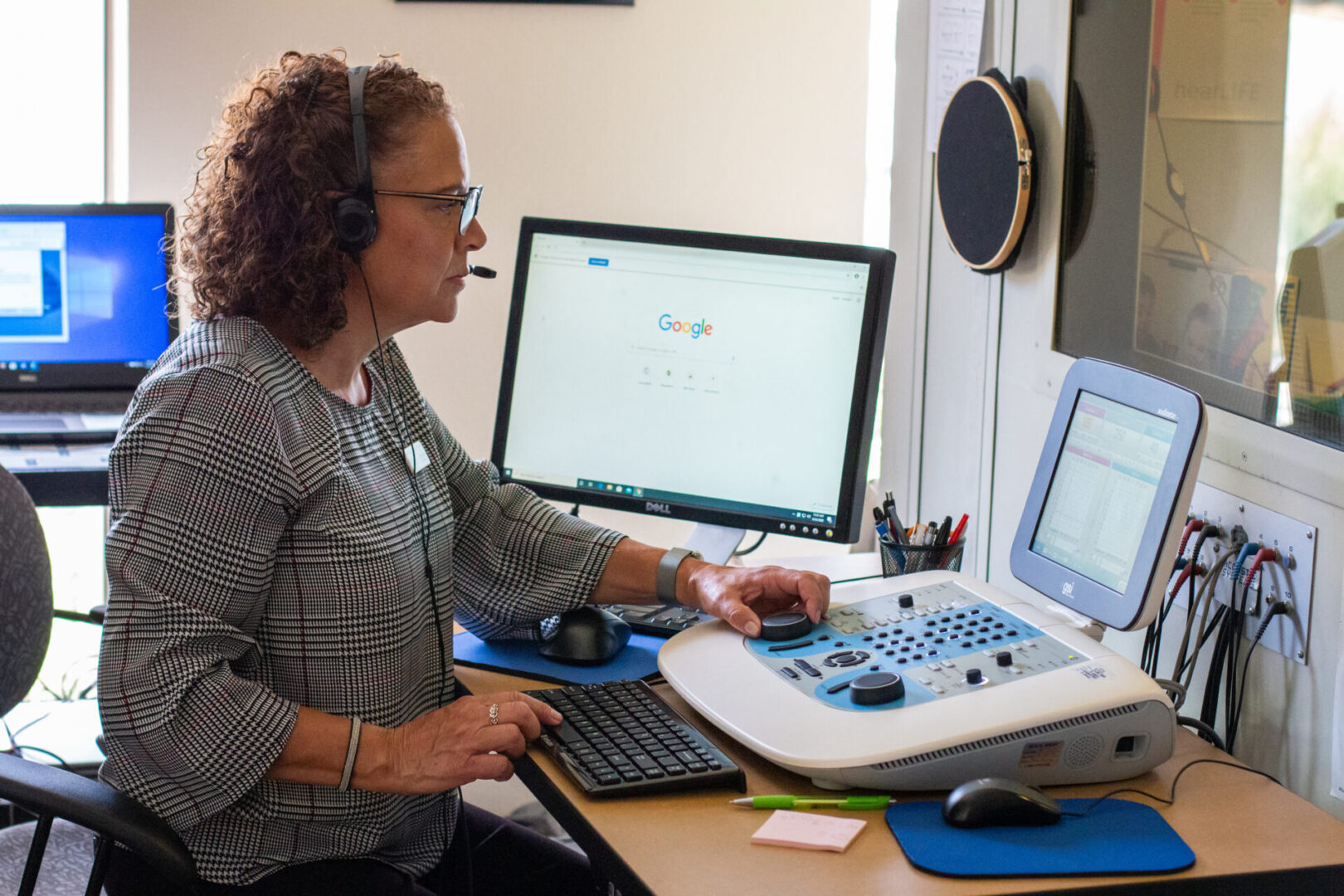
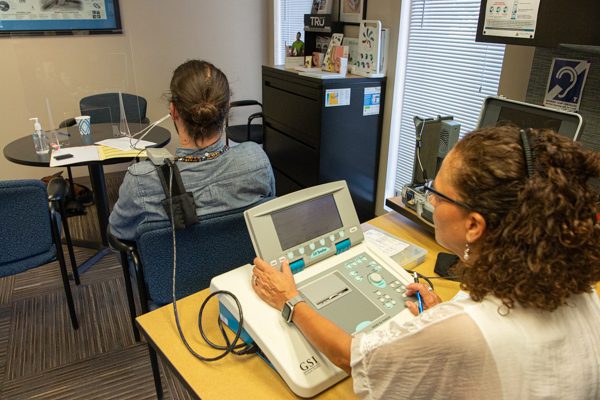
We have a new easily accessible ADA-compliant facility with up-to-date clinical testing equipment. This equipment includes high-frequency testing and state of the art hearing aid equipment. Plus, we provide interpreting services for over 250 languages!
We have audiologists available with specialties in Tinnitus, Music, Pediatrics, Cochlear Implants (CI), and so much more!
Additionally, we provide many types of tests including Cochlear Implant Candidacy testing, Auditory Processing Disorder testing, Visual Reinforcement Audiometry (VRA), Auditory Brainstem Response (ABR), Auditory Steady State Response (ASSR), and Otoacoustic Emissions (OAE)
For the best patient experience, we coordinate with school services, our in-house speech language pathologists, and many financial assistance, state, and VA programs.
We accept most major insurance plans, including Medicare and Medicaid.
Request an appointment today!
TYPES OF HEARING TESTS
Speech Recognition and Speech Understanding - tests of speech recognition and speech understanding in quiet and in noise are used to evaluate speech clarity.
Pure-Tone Audiometry – PTA measures hearing sensitivity and helps audiologists in determining the type, degree, and configuration of hearing loss.
Otoacoustic Emissions – a measurement of the hair cell function in the inner ear, specifically the sound generated by normally functioning cochlea.
Tympanometry – a measurement of the air pressure in the middle ear to test middle ear function and concerns.
Bone Conduction – An oscillator vibrates and sends the pure-tone sound directly into the cochlea, bypassing the outer and middle ear. This helps determine whether there is a concern with the outer ear or the middle ear.
Acoustic Reflex – acoustic reflex tests use high sound pressure to measure the response of intratympanic muscles.
Ultra high-frequency audiometry – an extension of the pure-tone audiometry above 8kHz to test for hearing loss caused by ototoxicity, noise exposure, and acoustic trauma in patients reporting tinnitus.
Auditory Brainstem Response (ABR) and Auditory Steady State response (ASSR) -tests used to measure brain wave activity in response to sound stimulation. These tests allow audiologists to estimate hearing in infants or individuals who are not able to give reliable responses to soft sounds.